Predictive-Analysis-with-Python-Athena-Global-Education-
Project Overview:
This project focuses on developing predictive analysis models using Python to analyze trends and forecast outcomes based on historical data.
Description:
Developed a predictive analysis model using Python to analyze trends and forecast outcomes based on historical data.
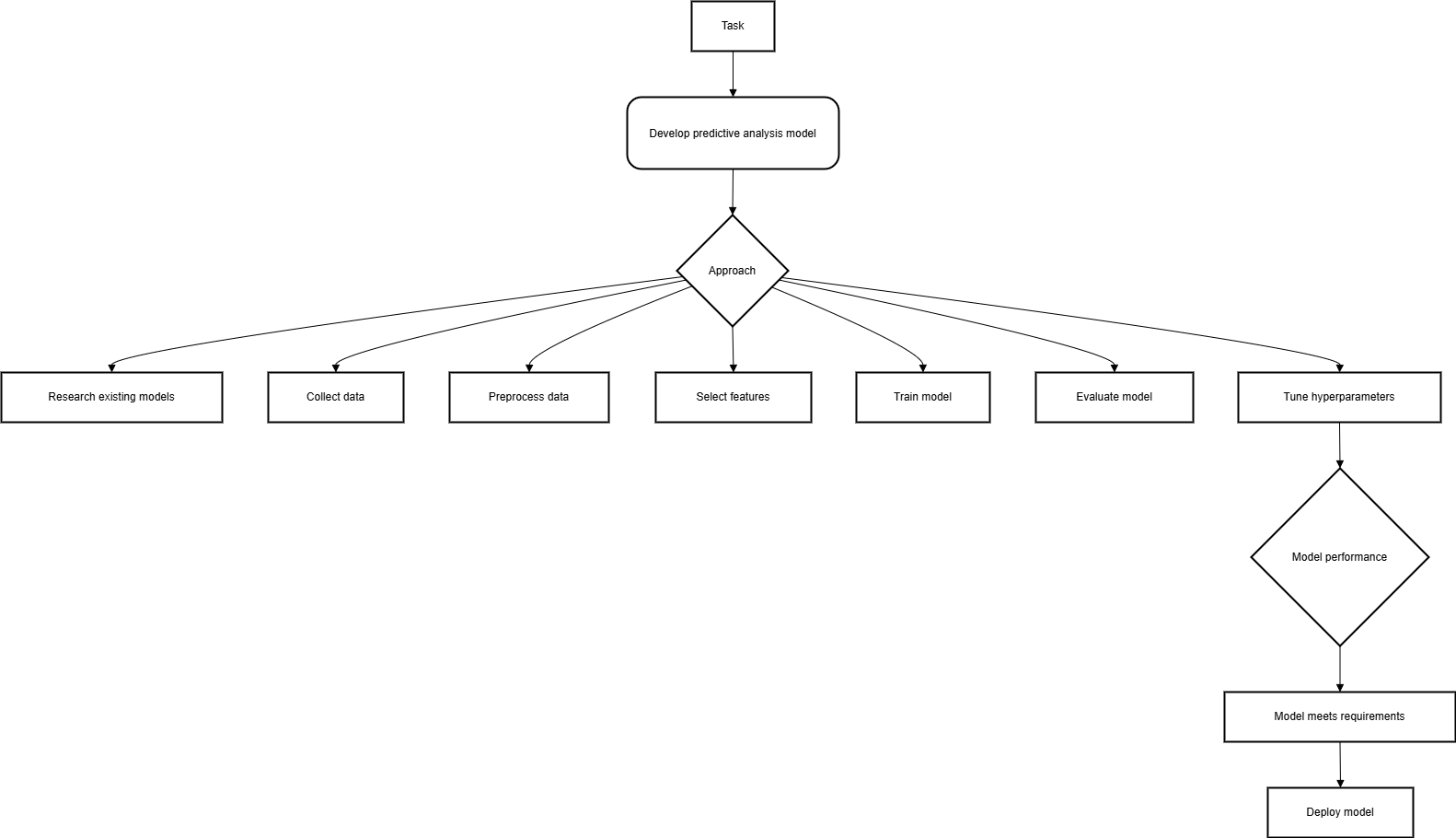
Project Structure
Key Features:
• Data Collection & Preprocessing: o Gathered and cleaned diverse datasets from various sources.
o Handled missing values, outliers, and data inconsistencies.
o Performed feature engineering to extract relevant information.
• Machine Learning Algorithms: o Implemented a range of supervised and unsupervised learning algorithms: Linear Regression, Decision Trees, Random Forests Support Vector Machines, K-Nearest Neighbors Clustering algorithms (K-Means, DBSCAN)
o Evaluated model performance using appropriate metrics (e.g., accuracy, precision, recall, F1-score, RMSE).
o Tuned hyperparameters to optimize model performance.
• Data Visualization: o Created insightful visualizations (e.g., line plots, scatter plots, histograms, heatmaps) using Matplotlib and Seaborn.
o Developed interactive dashboards using libraries like Plotly or Dash.
o Generated comprehensive reports summarizing findings and model performance.
• Trend Forecasting: Predicted future trends based on historical data patterns.
• Real-World Application: Applied predictive models to business and research scenarios.
Technology Stack • Programming Languages: Python
• Libraries: o Data Manipulation: Pandas, NumPy
o Machine Learning: Scikit-learn, TensorFlow/Keras
o Data Visualization: Matplotlib, Seaborn, Plotly
o Dashboarding: Dash (optional)
Skill Set Demonstrated:
• Data Analysis: Python (NumPy, Pandas)
• Machine Learning: Scikit-learn, TensorFlow
• Visualization Tools: Matplotlib, Seaborn
Contribution:
• Designed and implemented machine learning models for predictive analysis.
• Conducted exploratory data analysis (EDA) to identify key trends.
• Developed dashboards and reports showcasing insights derived from data.
• Applied the predictive models in practical scenarios, such as sales forecasting and risk assessment.
Future Development
• Explore advanced deep learning models (e.g., recurrent neural networks, convolutional neural networks) for more complex tasks.
• Implement real-time predictions and integrate models into production systems.
• Investigate techniques like anomaly detection and time series forecasting.
• Expand the project to include natural language processing (NLP) or image recognition capabilities.